Premium Product Catalogue

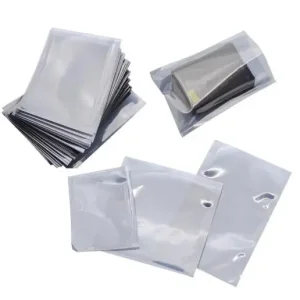

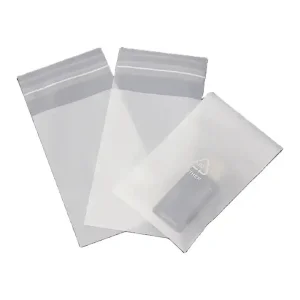
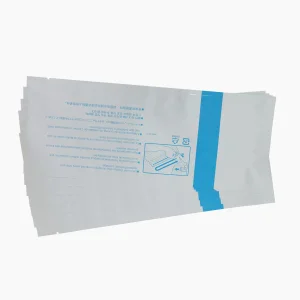


Technical Brief & Physics of ESD Protection
In today's ultra-sensitive semiconductor manufacturing landscapes, the rapid evolution of sub-3nm chip geometries has elevated electrostatic risk management from a secondary utility to a critical production gateway. Modern integrated circuits (ICs), high-density memory matrices, sensor arrays, and automotive control modules are increasingly sensitive to even microscopic electrostatic discharge (ESD) events.
Electrostatic discharge acts as a stealthy killer on production floors, during long-distance transits, and throughout global storage cycles. Without robust protection, a minor triboelectric charge buildup on packaging materials can instantly puncture thin gate oxides or vaporize metalized pathways inside microchips.
"True ESD Static Shielding Bags do not merely slow down static accumulation; they form an engineered Faraday Cage. This dynamic, multi-layered structural architecture redirects high-voltage transient currents around its exterior skin, protecting the delicate internal microelectronic payload from electromagnetic and electrostatic field exposures."
As a premier wholesale ESD static shielding bag supplier, we integrate comprehensive manufacturing control mechanisms. Our bags are engineered to meet and exceed global standards, utilizing specialized polymer science to maintain structural and anti-static integrity across thousands of shipment miles.
Engineered Materials Science
Achieving optimum electrostatic containment requires complex chemical co-extrusion and high-precision vapor metallization. A high-quality ESD Static Shielding Bag is never constructed from a single film; rather, it is a meticulously engineered sandwich of protective physical layers.
Composed of high-tensile, abrasion-resistant dissipative polyester (PET). This exterior layer is specially formulated to mitigate charge generation arising from triboelectric friction when packages rub together. It features a controlled surface resistivity of 10^9 to 10^11 ohms, gently dispersing external charges away from the metallic core.
At the heart of the bag lies an ultra-thin layer of vacuum-deposited aluminum. This metallic layer forms the critical Faraday cage. By creating a continuous electrical path, it isolates the internal components from external electromagnetic fields (EMI) and static discharges, attenuating incoming electrostatic energy down to near-zero levels.
An internal surface layer consisting of customized polyethylene (LDPE/LLDPE). This layer is in direct contact with your delicate electronic components. Engineered completely free of amine-based additives to avoid polycarbonate stress cracking, this layer keeps internal triboelectric generation to a minimum while maintaining a highly reliable heat seal.
Innovation and R&D Pipeline
At ESD-PAC VINA, we recognize that the future of microelectronics protection requires proactive R&D. As microchip manufacturing transitions below the sub-2nm node threshold, traditional passive shielding boundaries must adapt. Below is the technical innovation roadmap driving our product development:
Traditional static shielding films rely heavily on petroleum-based plastics that pose environmental challenges. We are actively developing compostable, bio-derived ESD shielding films that blend plant-based polyhydroxyalkanoates (PHA) with conductive, organic polymers. This maintains critical surface resistivity ranges without long-term ecological impact.
To replace standard vacuum-metallized aluminum—which can crack or degrade when repeatedly creased—our research lab is integrating flexible Carbon Nanotube (CNT) networks. CNT-enhanced barriers offer isotropic electrical conductivity, superior flex-crack resistance, and unmatched structural durability over long transit cycles.
Developing custom intelligent packaging films that change colors or report diagnostic metrics via printed RFID sensors if the ESD shield is breached or if relative humidity levels inside the barrier pouch exceed critical limits during maritime shipping.
Global Sector Deployment
Different industries present unique, harsh operating environments. Generic packaging fails to address specific mechanical and chemical hazards. We deliver tailor-made, macro-industry solutions to safeguard high-value supply lines worldwide.
Autonomous driving platforms and EV control systems rely heavily on complex ECU assemblies and radar/lidar boards. Our specialized heavy-duty moisture barrier and anti-static shielding bags offer heavy-gauge puncture resistance and chemical inertness to withstand extreme mechanical handling on automotive integration lines.
Avionics demand absolute failure-free operation. We supply ultra-clean, low-outgassing ESD static shielding bags that conform to military-grade specifications. By preventing the release of organic outgassing residues, we protect delicate optical components and fine space-bound electronics from contamination.
Precision medical electronic instruments require sterile, static-controlled environments. Our packaging is manufactured in cleanroom environments using strict biological-load control practices, ensuring that your life-critical pacing devices, sensory implants, and surgical electronics remain both static-free and biologically safe.
Compliance, Regulatory & Quality Matrices

When supplying global enterprises, there is no margin for compliance deviations. Our ESD protection systems are verified and periodically validated to guarantee alignment with dominant international standards. We perform rigorous batch-testing using specialized testing suites, confirming the exact surface resistivity and electrostatic discharge decay behavior of each batch.
ANSI/ESD S20.20-2021 & IEC 61340-5-1: Our static shielding bags deliver standard-compliant attenuation, measuring less than 10 nanojoules of energy penetration when tested under the HBM (Human Body Model) discharge protocols.
RoHS & REACH Compliance: Environmental stewardship is deeply embedded in our operations. All composite layers are certified free of heavy metals, restricted phthalates, and brominated flame retardants. We provide active RoHS/REACH declaration forms to streamline your corporate compliance.
MIL-DTL-81705D Support: For military packaging contracts, we offer structures designed to resist severe environmental conditioning, providing high mechanical strength alongside anti-static performance.
Advanced Manufacturing & Global Footprint
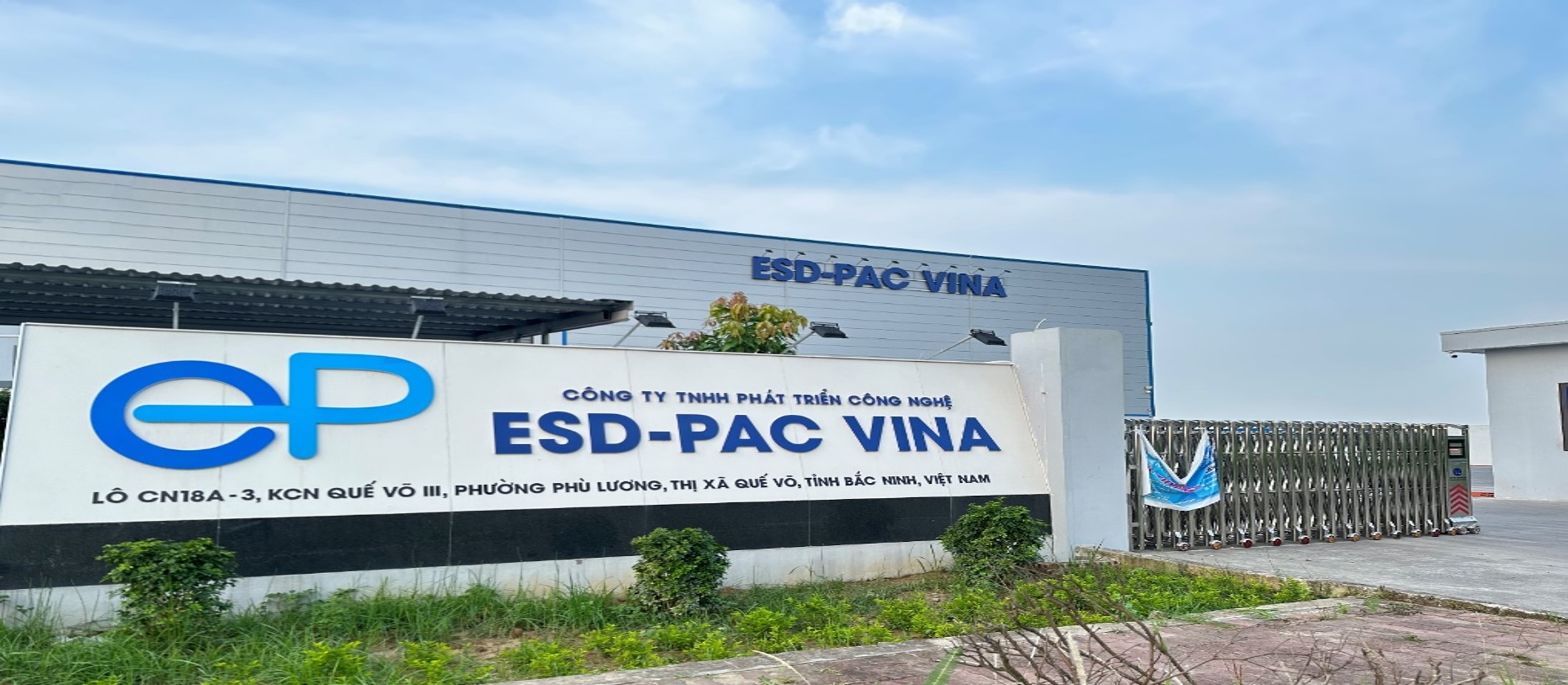
Established in March 2018, ESD-PAC VINA has emerged as a premier manufacturer of complex functional films, anti-static films, aluminum foil pouches, and high-performance vacuum bags. Centered in the highly developed industrial hub of Bac Ninh Province, Vietnam, we operate two modern production sites within the prestigious Quy Vu Industrial Park.
Our recent strategic manufacturing expansion has scaled our operational factory floor space to 12,000 square meters. This growth enables us to deliver unmatched supply chain flexibility, offering deep custom capabilities alongside consistent high-volume capacity for multinational corporations.
By implementing Factory 4.0 standards across our Vietnam-based lines, we integrate real-time electronic thickness monitoring, fully automated tension management, and positive-pressure cleanroom bag conversion lines. Our dual-facility operational model provides essential geographical redundancy, mitigating logistics bottlenecks and ensuring stable, interrupted supplies of ESD shielding bags to major ports across North America, Europe, and Asia.
Quality Verification Systems
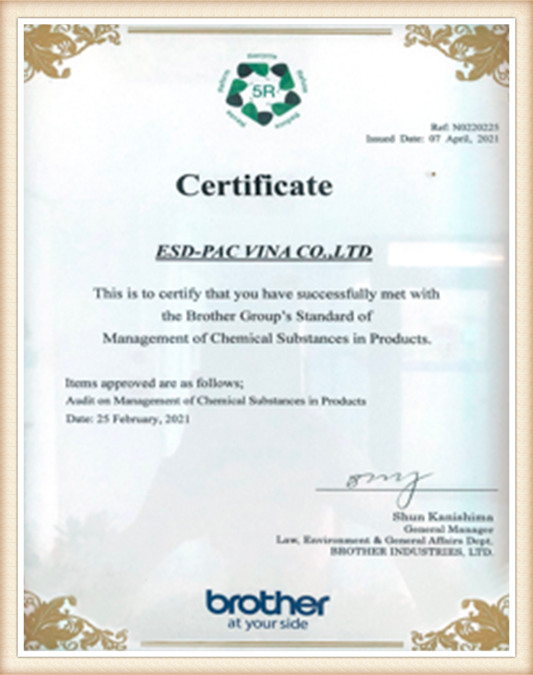
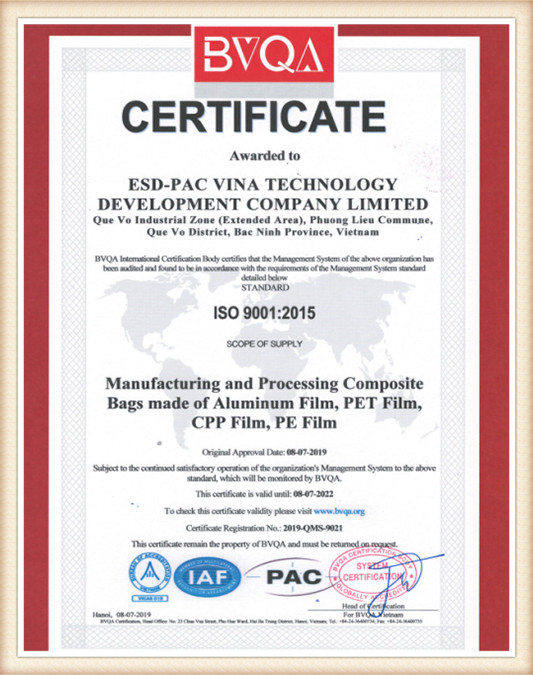
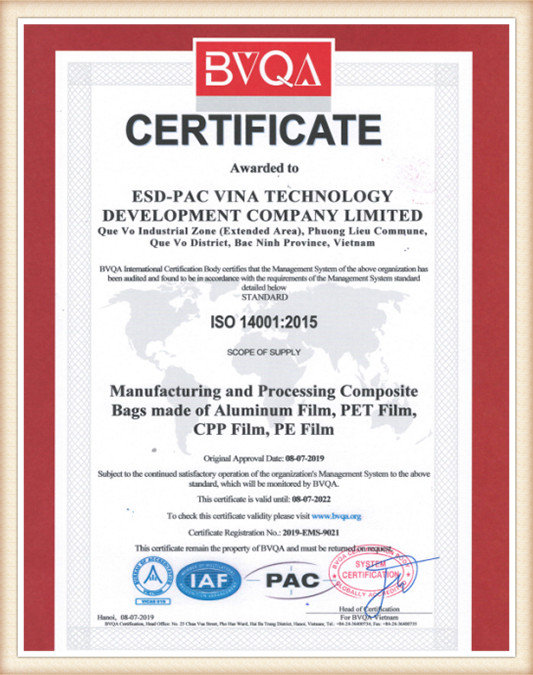
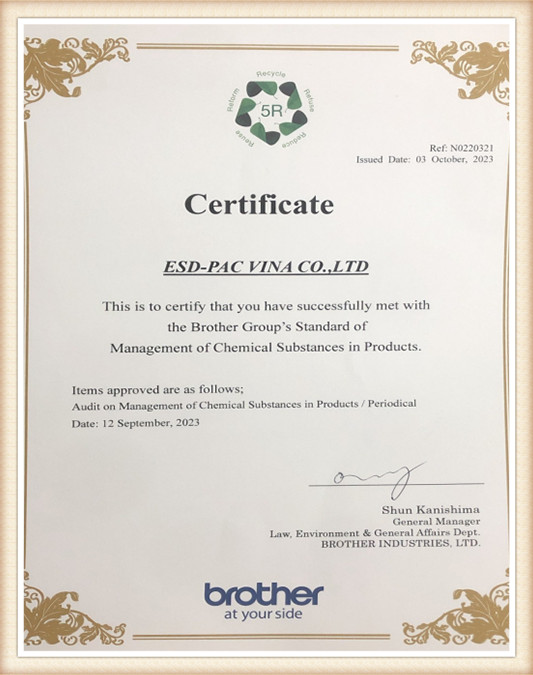
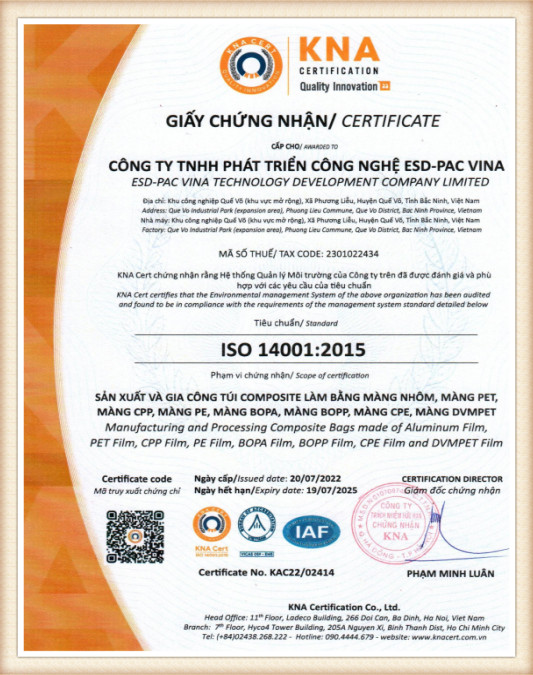
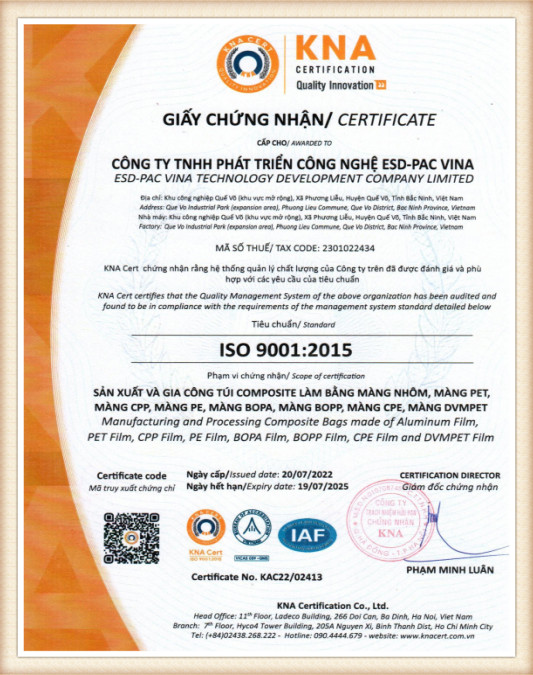
Our operations strictly conform to international safety and quality standards: API 6D, API 607, CE, ISO9001, ISO14001, ISO18001, TS. (Please contact our support desk for original certificate verification files.)
Strategic Procurement Management
For global procurement directors, procuring ESD packaging goes beyond unit cost. It requires optimizing the Total Cost of Ownership (TCO), mitigating shipping risks, and ensuring supply line continuity.
Optimized Packaging Geometry: We design custom pouch dimensions tailored to your exact components, reducing excess material usage. Smaller, form-fitting shielding bags translate directly to reduced spatial requirements during air and sea shipments, saving cargo volumes and decreasing transport carbon footprints.
Zero Latent Defect Risk: Low-grade anti-static bags often suffer from layer delamination, metal corrosion, or static decay failure. If static damage occurs, the financial impact of field failures and component returns can be devastating. By partnering with a vertically integrated manufacturer like ESD-PAC VINA, you safeguard your component yields and protect your brand equity.
Answers to Technical Questions
Premium Sourcing Matrix
 ESD-PAC VINA