
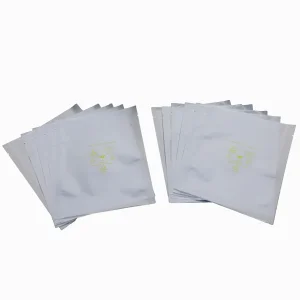
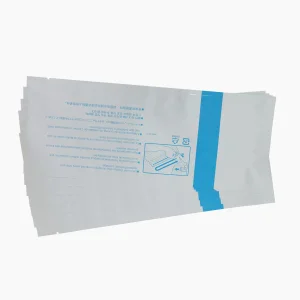
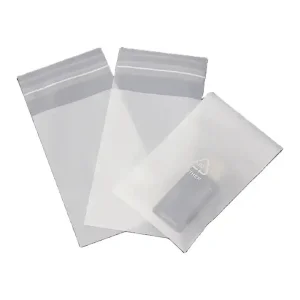
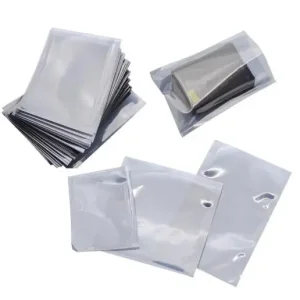


In the modern microelectronics era, Electrostatic Discharge (ESD) represents one of the primary threats to product reliability, performance, and longevity. As microchips and semiconductors transition into sub-nanometer geometries, the internal dielectric structures become increasingly thin and vulnerable. An electrostatic potential difference as low as 10 to 100 volts is sufficient to puncture internal gate oxides, rendering advanced circuit boards permanently damaged or, worse, causing latent failures that manifest only after deployment in critical aerospace, automotive, or industrial settings.
To mitigate these complex thermal-electrical failures, high-performance ESD protection packaging functions under the scientific physics of a Faraday Cage. A high-quality ESD bag utilizes multi-layered substrate structures to construct an electrostatic shield that attenuates external electrical fields, dispersing and redirecting charges along the external surface layer rather than allowing them to penetrate and damage the components packed inside.
An engineering analysis of state-of-the-art ESD bags reveals that their protective capabilities are not a product of a single film, but rather a carefully structured composite laminate. Each layer serves a specific thermodynamic and electrical function to shield the enclosed electronic equipment from mechanical force, vapor, oxygen, and electrostatic events:
Constructed using advanced polyester (PET) coated with static dissipative compounds. This layer facilitates a slow and controlled discharge of electrostatic potential when in contact with operators or transport gear, minimizing triboelectric charge accumulation.
A microscopic vapor-deposited aluminum layer (typically 0.4 to 1.0 mil thick) forms a robust Faraday Cage. This core stops electric field penetration and offers deep attenuation against ambient electromagnetic interference (EMI).
The interior layer is lined with customized low-charging polyethylene (LDPE/LLDPE), preventing triboelectric charges from generating on the product during movement. This chemical formulation is completely amine-free to prevent outgassing onto sensitive microcircuitry.

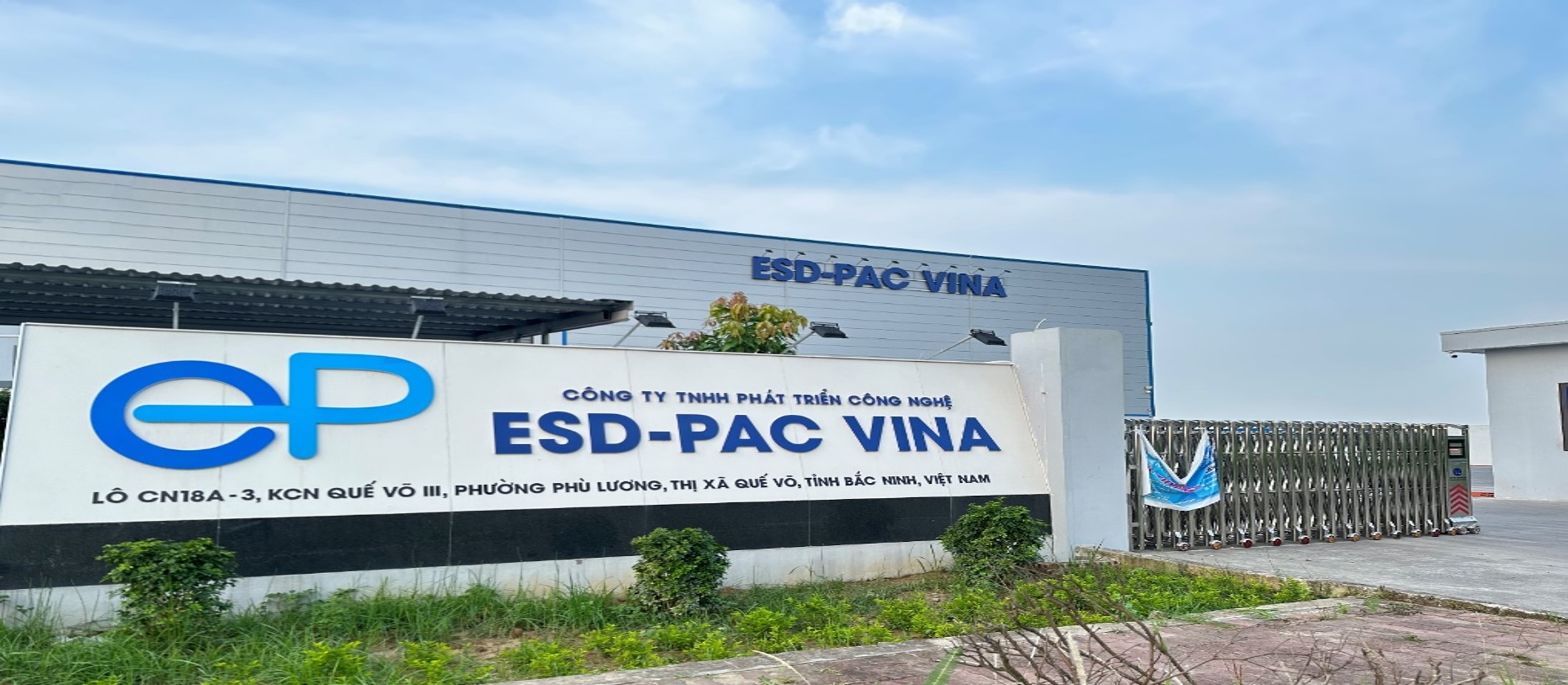
Welcome to our high-tech manufacturing company, strategically situated within the bustling high-growth industrial cluster of Bac Ninh Province, Vietnam. Established in March 2018, we have rapidly emerged as a leading manufacturer of premium foils, anti-static films, aluminum pouches, anti-static bags, and customized vacuum packaging solutions.
We operate two modern, state-of-the-art manufacturing plants within the prestigious Quy Vu Industrial Park, Bac Ninh. To support our expanding domestic and international demand, we have scaled our total manufacturing footprint to a colossal 12,000 square meters. This aggressive physical expansion reflects our steadfast corporate commitment to supply high-capacity, faultless protective packaging to top-tier semiconductor OEMs globally.
Our corporate structure seamlessly integrates advanced fabrication, raw material R&D, quality engineering, and client-centric distribution to ensure we deliver consistent mechanical durability and optimal chemical safety.
At ESD-PAC VINA, we recognize that true industrial leadership is defined not only by commercial performance, but by environmental responsibility. We actively work to reduce the ecological impact of polymer manufacturing by implementing eco-friendly practices, including advanced heat recovery systems in extrusion processes, zero-waste plastic recycling programs, and optimized logistics routing.
Through our computerized closed-loop manufacturing architecture, we minimize electricity and water use, optimizing operational performance across all extrusion lines.
Our facility reclaims up to 99% of in-house polymer scraps, feeding them into specialized auxiliary processes, dramatically decreasing post-industrial waste levels.
Our strategic position within Quy Vu Industrial Park, Bac Ninh, Vietnam, enables efficient maritime shipping routes, significantly reducing long-haul carbon emissions.
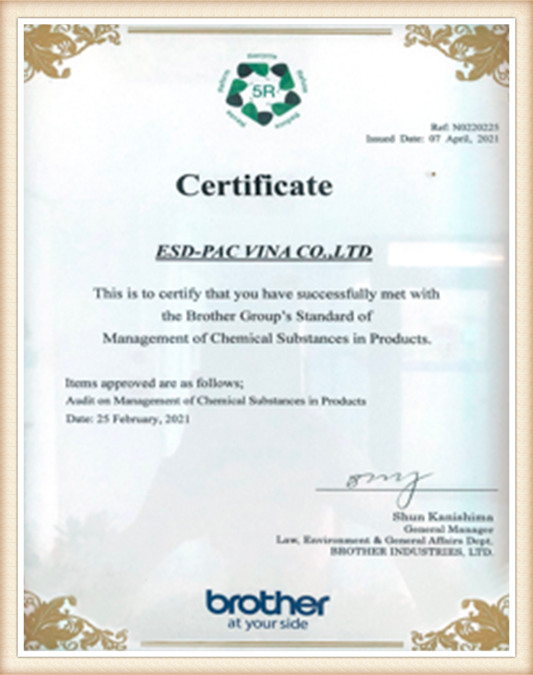
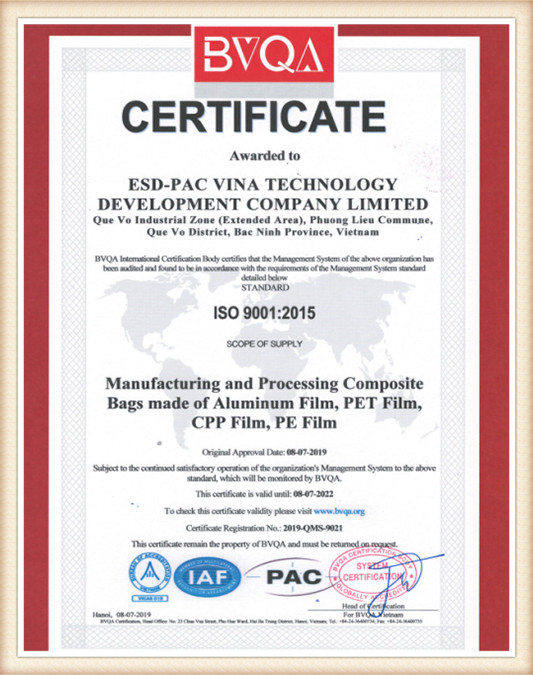
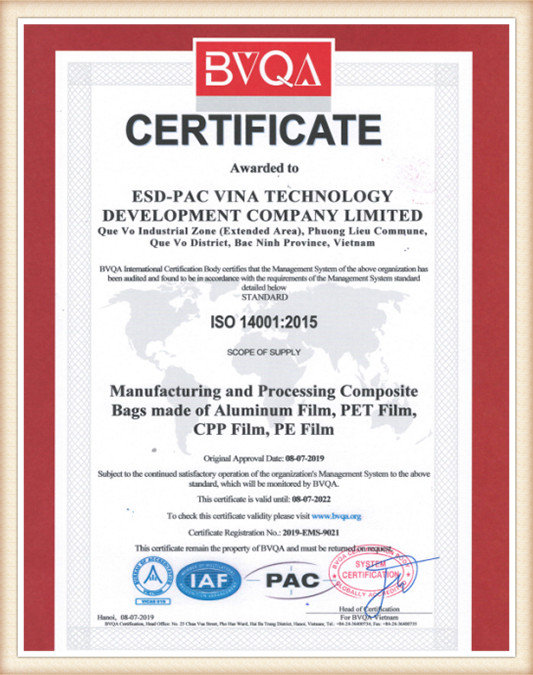
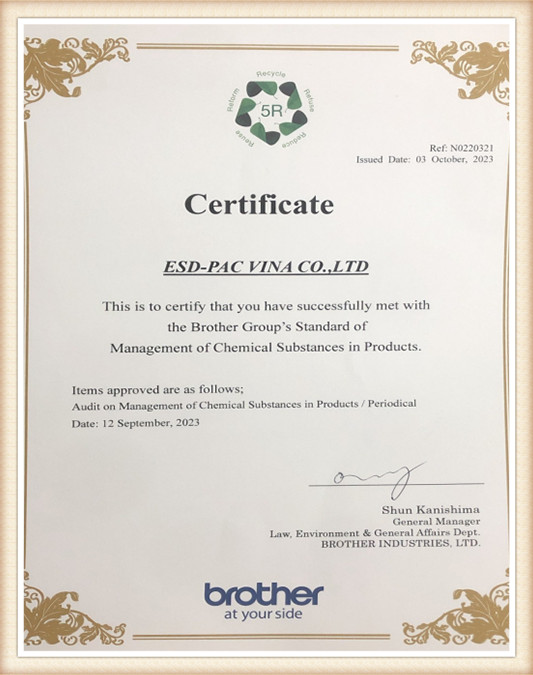
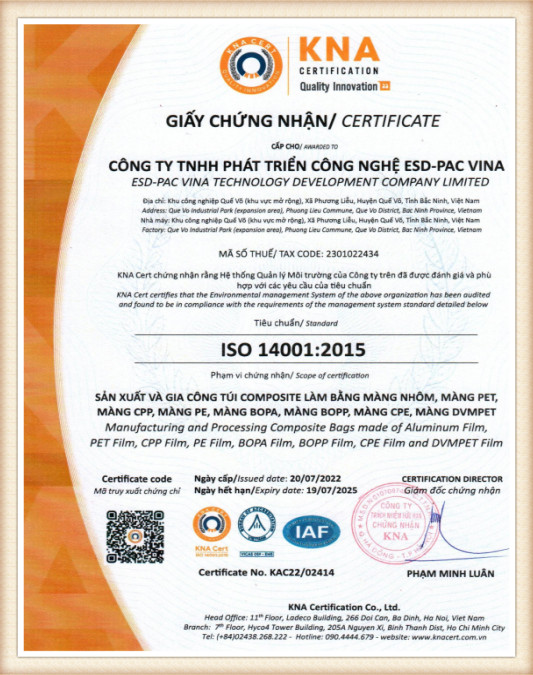
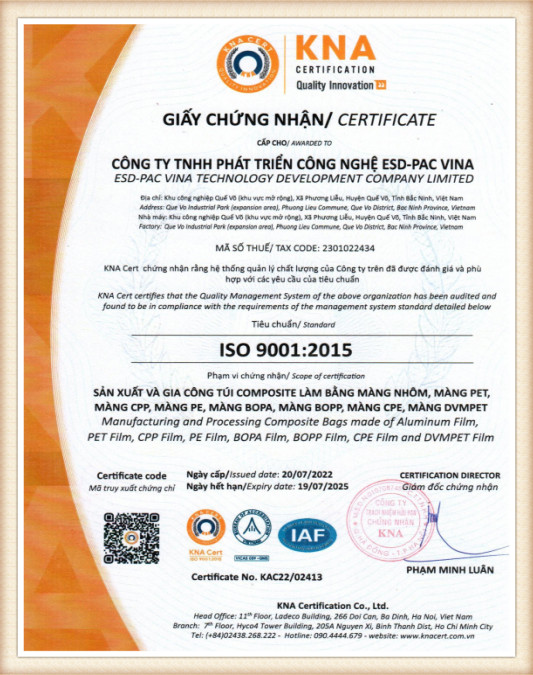
Every production batch at our factory undergoes rigorous testing to meet strict safety and quality standards, maintaining active certifications across major compliance framework bodies.
Compliant Certifications: API 6D, API 607, CE, ISO9001, ISO14001, ISO18001, TS. (Certificates are fully verifiable upon formal request)
As manufacturing processes become increasingly complex worldwide, the need for robust electrostatic protection and specialized high-barrier packaging spans across several advanced industries:
Protecting raw silicon wafers, packaged IC devices, microchips, and BGA substrates during cleanroom logistics and global transit between packaging facilities.
Safeguarding highly delicate, complex electronic assemblies, ADAS sensory modules, and high-voltage vehicle control architectures from static and humidity damage.
Meeting military and aerospace packaging requirements (MIL-STD compliance) to protect mission-critical PCBAs, sensor suites, and optoelectronics from ambient hazards.
Biomedical diagnostic gear, pacing architectures, and specialized surgical arrays require sterile, moisture-proof, and ESD-safe barriers to perform reliably.
Customized barrier packaging prevents moisture and powder static issues in imaging consumables, ensuring optimal drum functionality.
Protecting high-value retail products, graphics cards, motherboard modules, and hard drives from environmental degradation and end-user static risks.
With the ongoing adjustments in global electronics supply chains, many international brands are adopting the China+1 strategy. Operating from Bac Ninh, Vietnam, we are positioned to provide seamless, tax-efficient shipping directly into North American, European, and Asia-Pacific markets.
Our high-quality ESD shielding and barrier bags comply with key global environmental and technical standards, including RoHS Directive 2011/65/EU, REACH (EC 1907/2006), and ANSI/ESD S20.20-2021.
We utilize advanced testing tools, including specialized surface resistivity meters, static decay simulators, and precise moisture vapor transmission rate (MVTR) instruments. Every batch of our anti-static barrier bags is fully trackable from raw polymer feedstock to the finished product.
Our on-site laboratories carry out rigorous, multi-step quality control testing to ensure structural integrity and ESD performance, focusing on key parameters:
To remain at the forefront of the global industry, the R&D team at ESD-PAC VINA continuously develops new product formulations, focusing on sustainability, performance, and advanced integration.
Investigating and testing recyclable, biodegradable, and post-consumer recycled (PCR) anti-static barrier polymers to reduce plastic waste without compromising ESD safety.
Integrating advanced carbon nanomaterials into co-extruded films to provide long-lasting, highly stable conductive performance without relying on chemical anti-static coatings.
Developing built-in sensors and visual indicators to monitor moisture levels, temperature, and ESD exposure in real-time during transport.
Pink anti-static bags are simply low-charging polyolefin films that prevent static charge generation from friction, but they do not block external electrical fields. In contrast, static shielding bags feature a metalized film layer that forms a Faraday Cage, protecting enclosed items from direct static discharge and external electrostatic fields.
Moisture barrier bags are required for SMD (surface mount device) components that are sensitive to ambient moisture, preventing delamination and solder issues during wave soldering processes. While standard shielding bags offer basic static protection, MBB bags combine ESD shielding with a foil layer to provide a very low Moisture Vapor Transmission Rate (MVTR), protecting moisture-sensitive devices.
Generally, ESD shielding bags have an operational shelf life of three to five years, depending on storage conditions. For optimal lifespan, they should be stored in a dry, clean warehouse at moderate temperatures (between 10°C and 30°C) with a relative humidity below 60%.
We perform regular, in-line testing using calibrated, advanced instruments to verify surface resistivity and static decay times. Our materials and manufacturing processes are regularly audited by external agencies to maintain our ISO9001 and ISO14001 certifications.
 ESD-PAC VINA