What Are the Top Vacuum Packing Machine Manufacturers in China?

Time:2026-10-16 Author:Ethan
0%

China has become a major manufacturing base for commercial Vacuum Packing equipment. Its factories serve food processors, seafood exporters, pharmaceutical suppliers, and household brands. However, production volume alone does not prove technical leadership.

Grand View Research estimates that the global vacuum packaging market could expand at a 5.8% compound annual growth rate from 2024 to 2030. Mordor Intelligence also identifies food preservation, longer shelf life, and rising convenience-food demand as important growth factors. These trends explain why Chinese manufacturers continue improving chamber machines, external vacuum sealers, thermoformers, and automated packaging lines. Yet, market estimates vary between research firms. That difference deserves attention.

Food-packaging specialist Dr. Ted Labuza offered a practical warning: “Vacuum packaging is not a substitute for refrigeration.” This principle remains essential. Removing air can slow oxidation and reduce exposure to contaminants, but it cannot replace temperature control, sanitation, or validated processing. Reliable manufacturers should therefore provide measurable vacuum levels, sealing-temperature controls, oxygen-residual data, and clear maintenance procedures.

This guide examines leading Chinese manufacturers through an evidence-based lens. It considers factory experience, product consistency, certifications, export records, customization capability, and after-sales support. A polished website is not enough. Neither is the lowest quotation.

Some suppliers excel at compact machines. Others build complete production lines. The best choice depends on product type, bag material, throughput, workplace conditions, and compliance requirements. Rankings can never be perfect. Still, careful comparison can reveal which manufacturers offer dependable performance beyond attractive brochures and impressive factory photographs.
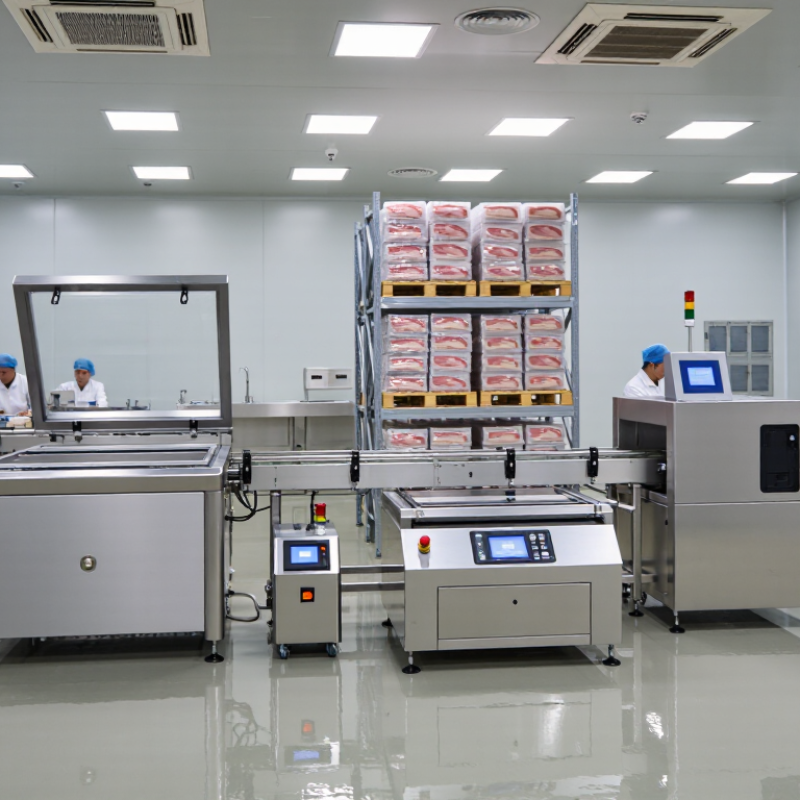
What Are the Top Vacuum Packing Machine Manufacturers in China?

Define “Top” by Vacuum Level, Pump Capacity, Throughput, and Sealing Width

What Are the Top Vacuum Packing Machine Manufacturers in China?

“Top” should mean measurable performance, not factory size or attractive brochures. For Chinese vacuum packing machine manufacturers, compare four figures: vacuum level, pump capacity, throughput, and sealing width. A chamber machine reaching around -0.99 bar can remove air effectively, but altitude, product temperature, and bag leakage affect the result. A 100 m³/h pump may appear powerful, yet its real output can fall under continuous production conditions.

Grand View Research’s 2024 vacuum packaging market report identifies food processing as a major demand area, where hygiene, repeatability, and production speed matter. PMMI’s 2023 packaging machinery report also highlights automation and operational efficiency as key purchasing factors. These findings support a practical test: measure cycles per hour with your actual bags and products. A machine sealing 600 mm may not outperform one sealing 500 mm if its pump needs longer recovery time. Numbers can mislead.

Tips: Ask for recorded vacuum curves, not only maximum vacuum claims. Check effective pump capacity, chamber dimensions, seal temperature stability, and spare-parts response time. Test sliced meat, liquids, and rigid products separately. Request a factory acceptance test using your own packaging film. It is easy to overlook operator loading time. That mistake can reduce advertised throughput by 20% or more. Also verify whether “double sealing” means two independent seals or one wider seal; the difference affects leak protection and maintenance.

What Are the Top Vacuum Packing Machine Manufacturers in China? - Define “Top” by Vacuum Level, Pump Capacity, Throughput, and Sealing Width

Comparison of representative China-made vacuum packing machine performance tiers. Specifications vary by model, chamber size, product type, and configuration.
Performance Tier Typical Machine Format Ultimate Vacuum Pump Capacity Typical Throughput Sealing Width Typical Application
Entry-Level External suction or compact single-chamber machine −0.08 to −0.095 MPa
80–30 mbar absolute
4–20 m³/h 1–4 cycles/min 200–400 mm Small food processors, restaurants, retail and laboratory use
Standard Commercial Floor-standing single-chamber machine −0.095 to −0.099 MPa
30–10 mbar absolute
20–40 m³/h 2–6 cycles/min 300–600 mm Meat, seafood, cheese, coffee, prepared foods and general packaging
Heavy-Duty Double-chamber floor-standing machine −0.098 to −0.099 MPa
20–10 mbar absolute
40–100 m³/h 3–8 cycles/min 400–800 mm Meat plants, seafood operations, industrial food processors and export packaging
High-Output Automatic rotary or multi-chamber vacuum machine −0.098 to −0.099 MPa
20–10 mbar absolute
100–300 m³/h 8–20 cycles/min 600–1,200 mm Large-scale food production, high-volume meat and seafood packaging
Thermoforming Line Automatic thermoforming vacuum packaging system −0.098 to −0.099 MPa
20–10 mbar absolute
100–300 m³/h 6–20 cycles/min 320–1,000 mm Retail-ready meat, cheese, seafood, medical and modified-atmosphere packaging
Custom Industrial Integrated vacuum, gas-flushing or conveyor-based line −0.095 to −0.099 MPa
30–10 mbar absolute
60–300 m³/h 5–30 cycles/min 500–1,500 mm Customized production lines requiring automation, traceability and continuous operation
Evaluation note: “Top” should be assessed by the required vacuum level, installed pump capacity, actual packaged units per minute, sealing width, sealing temperature control, material quality, after-sales support and compliance with applicable safety standards. Throughput figures are indicative and depend on bag dimensions, product temperature, loading method, vacuum time and sealing time.

Compare Chinese Manufacturers Using 20–60 m³/h Pump and ≤1 mbar Benchmarks

Chinese vacuum packing machine manufacturers should be compared through verified pump performance, not catalog claims. A practical shortlist uses 20–60 m³/h pumping speed and ultimate pressure of 1 mbar or lower. These figures suit many food, electronics, and industrial packaging lines. However, pumping speed is measured under defined conditions. It is not the same as the final pressure inside a loaded chamber.

Use ISO 21360-1 when reviewing vacuum-pump test data. The standard separates pumping speed, pressure, and measurement conditions. A supplier reporting 40 m³/h at 50 Hz deserves closer inspection than one listing only “high vacuum.” Recent vacuum-equipment market reports from MarketsandMarkets also identify energy efficiency and automation as major purchasing factors. Ask for power consumption, cycle time, chamber leakage, and oil-mist control. Small details matter.

During factory evaluations, I would request a live test with the buyer’s actual bag material and product load. An empty chamber can reach 1 mbar quickly, while moist products may slow evacuation sharply. That difference is easy to miss. Some suppliers provide excellent pumps but weaker sealing control. Others offer stable sealing yet overstate practical throughput. I would compare three cycles, not one. The result may look less impressive, but it is more honest.-vesm

China Vacuum Packing Machine Manufacturer Benchmark

Comparison of common pump-capacity classes from 20–60 m³/h against ultimate-vacuum benchmarks of ≤1 mbar

The chart uses anonymous benchmark profiles rather than company or brand names. Higher pump capacity generally supports faster evacuation, while a lower ultimate-vacuum value indicates stronger vacuum performance. All benchmark points fall within the 20–60 m³/h and ≤1 mbar comparison range.

Evaluate Food-Packaging Compliance Through CE, ISO 9001, and HACCP Standards

When evaluating top vacuum packing machine manufacturers in China, food-packaging compliance should come before price or production speed. CE marking indicates that machinery meets applicable European safety requirements, but it does not prove food-contact hygiene. Ask for the Declaration of Conformity, risk assessment, and the exact machine model covered.

ISO 9001 shows that the manufacturer operates a documented quality-management system. It can support consistent welding, sealing, inspection, and corrective actions. However, certification alone is not enough. Request recent audit evidence, calibration records, material certificates, and traceability from components to finished machines. HACCP is usually applied by food producers, not machine builders. Still, a responsible manufacturer should support HACCP controls through hygienic design, cleanable surfaces, controlled sealing temperatures, and documented testing. Small gaps matter, especially around chamber corners and gasket grooves. These areas can collect residue.

Tips: Verify certificate numbers with the issuing body. Check whether the scope includes manufacturing equipment. Request a factory video or independent inspection. Test your actual trays, films, and products before purchase. A smooth trial is useful, but it can hide future maintenance problems. Ask what happens after installation, including spare parts, training, and response times. Do not accept vague claims such as “food grade” without material details. Compliance paperwork is valuable, yet real evidence is stronger.

Rank Suppliers by Automation, Cycle Time, Installed Base, and Export Experience

What Are the Top Vacuum Packing Machine Manufacturers in China?

A practical ranking should measure automation, cycle time, installed base, and export experience. IFR’s World Robotics 2024 report recorded 276,288 robot installations in China during 2023. This signals strong automation capacity, but it does not prove packaging expertise. Buyers should inspect servo control, sensor integration, recipe storage, and remote diagnostics. A high-ranking supplier should demonstrate stable sealing at production speed, not only a polished showroom cycle.

Cycle time needs factory evidence. Ask for filmed tests using your pouch size, film structure, and product moisture. A claimed three-second cycle may exclude loading, gas flushing, or operator handling. PMMI industry reports continue to identify labor reduction and connected machinery as major packaging priorities.

Installed base is harder to verify. Request anonymized machine lists, commissioning dates, spare-part records, and two overseas customer references. Numbers without service evidence deserve caution.

Export experience can be checked through shipment records and documentation quality. UN Comtrade data under HS 8422.40 offers a useful, though imperfect, view of packing-machine trade. Review destination diversity, electrical compliance files, manuals, and response times across time zones. Suppliers with repeated exports usually understand commissioning risks better.

Still, export volume can hide weak after-sales support. A smaller installed base may reflect newer technology, not poor engineering. That distinction requires an on-site audit.

Assess Total Cost Through Energy Use, Warranty Terms, Spare Parts, and Service

When comparing vacuum packing machine manufacturers in China, purchase price is only one part of the decision. During factory audits, I review electricity use per cycle, pump capacity, sealing temperature, and daily output. A machine costing less may consume more power during long shifts. Ask for measured kWh data under working conditions, not only laboratory figures. Then estimate yearly energy costs using your local electricity rate and actual production hours.

Warranty wording deserves careful attention. Confirm whether coverage includes the vacuum pump, control system, heating elements, labor, and travel expenses. Many warranties exclude sealing bars and other wear parts. Request a written list of exclusions. Spare parts should have clear prices, stock locations, and delivery times. A low-cost component is not useful if it takes six weeks to arrive. Check whether replacement parts are interchangeable and easy for technicians to install.

Service quality can change the total cost significantly. Ask about installation, operator training, remote diagnosis, and emergency response times. Speak with existing users, preferably businesses with similar packaging volumes. I once underestimated technician travel costs because the quotation mentioned “support” without defining it. That mistake changed the expected payback period. Build a five-year spreadsheet covering energy, maintenance, consumables, downtime, warranty limits, and parts delivery. Leave room for uncertainty. Real production is rarely as smooth as the sales forecast.

FAQS

What documents should buyers request for machinery compliance?

Request the Declaration of Conformity, risk assessment, and exact model details. Check certificate numbers with the issuing organization. Paperwork helps, but evidence matters more.

Does CE marking prove food-contact hygiene?

No. CE marking addresses applicable machinery safety requirements. It does not prove hygienic food-contact design. Ask for material details and cleaning information.

How can ISO 9001 evidence be evaluated?

Request recent audit records, calibration documents, and material certificates. Also check component traceability through final assembly. A certificate alone is not enough.

How should HACCP support be assessed?

The machine should have smooth, cleanable surfaces and controlled sealing temperatures. Inspect chamber corners and gasket grooves carefully. Small residue traps can become maintenance problems.

How can a supplier’s automation ability be tested?

Inspect servo controls, sensors, recipe storage, and remote diagnostics. Use your actual trays, films, and products during testing. A showroom cycle may look better than production.

Why should claimed cycle time be questioned?

Ask whether loading, gas flushing, unloading, and operator handling are included. Request a filmed test with your pouch size and product moisture. Three seconds can mean different things.

How can installed base and export experience be verified?

Request anonymized machine lists, commissioning dates, and spare-part records. Ask for overseas customer references with similar production volumes. Export numbers alone prove little.

What costs belong in a five-year ownership estimate?

Include energy, maintenance, consumables, downtime, warranty limits, and spare parts. Measure electricity per cycle under real working conditions. Low purchase price can mislead.

What warranty and service details deserve attention?

Confirm coverage for the pump, controls, heating elements, labor, and travel. Request written exclusions for wear parts. “Support” needs a definition. Check response times, training, installation, and parts delivery.

Conclusion

Choosing the top Vacuum Packing machine manufacturers in China requires more than comparing prices or catalog features. A practical evaluation should consider vacuum performance, pump capacity, throughput, and sealing width. Machines with pump capacities of approximately 20–60 m³/h and vacuum levels reaching 1 mbar or below can provide a useful benchmark for demanding food-packaging applications. Buyers should also review sealing consistency, cycle time, automation options, and compatibility with different product sizes and packaging materials.

Compliance and long-term value are equally important. Reliable suppliers should demonstrate relevant CE and ISO 9001 documentation, while food-processing applications may benefit from HACCP-based production and hygiene controls. A strong installed base, export experience, responsive technical support, clear warranty terms, and readily available spare parts can reduce operational risk. Finally, total cost should include energy consumption, maintenance, downtime, and service quality—not only the initial purchase price. This balanced approach helps buyers identify manufacturers that deliver dependable performance, safe operation, and sustainable value.


Ethan

Ethan

Ethan is a seasoned marketing professional with a deep expertise in our company's innovative product line. With a passion for sharing knowledge and insights, he takes the lead in regularly updating our corporate blog, where he explores industry trends, product features, and effective marketing......