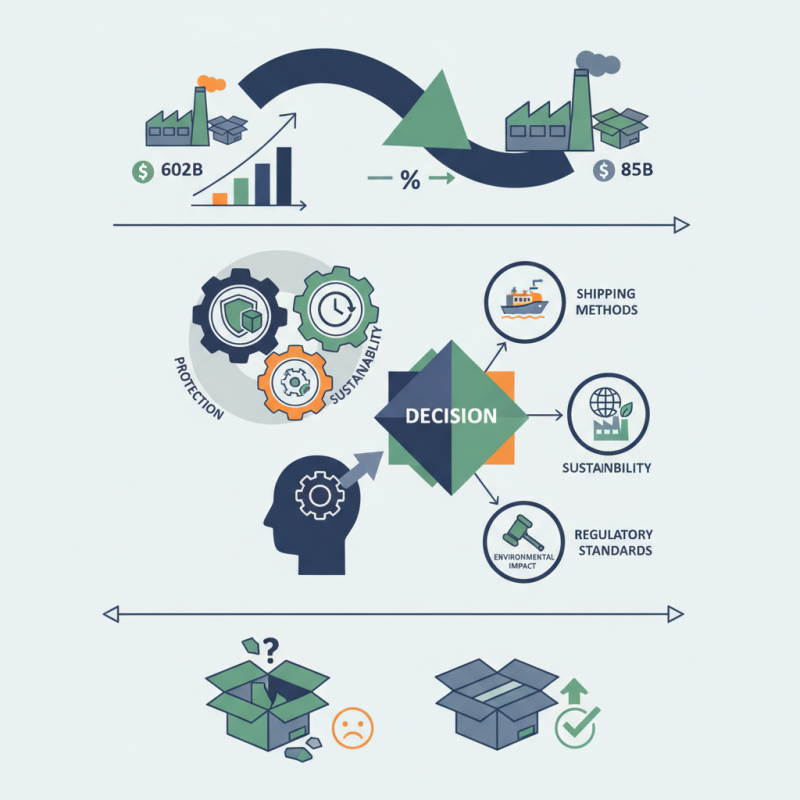
Choosing the right Industrial Packaging solutions is crucial for businesses in today's competitive landscape. The global industrial packaging market was valued at approximately $60 billion in 2022 and is projected to reach around $85 billion by 2027, according to a recent report by Smithers Pira. This growth underscores the increasing demand for efficient and sustainable packaging options across various sectors.
Expert in the field, Dr. Emily Carter, emphasizes, "Effective Industrial Packaging not only protects products but also enhances operational efficiency." With the rise of e-commerce and globalization, the need for robust packaging solutions is more pressing than ever. However, companies often overlook the complexities involved in selecting the right materials and designs.
This process requires careful consideration of factors like product type, shipping methods, and environmental impact. Many businesses have faced challenges when their packaging fails to meet regulatory standards or customer expectations. As the stakes rise, the importance of informed decisions in Industrial Packaging cannot be underestimated.
Industrial packaging solutions play a crucial role in the supply chain. They protect products during transit and storage. Choosing the right packaging can reduce damage and losses. This is essential for companies aiming to maintain profit margins. Quality packaging ensures that goods arrive at their destination intact. It builds trust with customers and partners.
Understanding the importance of industrial packaging goes beyond protection. Packaging also affects efficiency. It can streamline logistics and save time. Poor packaging can lead to delays and increased costs. Sometimes, companies overlook this aspect, thinking it’s secondary. However, the right design can enhance brand reputation. It reflects attention to detail and care for the product.
Companies should assess their specific needs carefully. This includes understanding product dimensions and weight. Additionally, finding the right materials is key. They must withstand various conditions. Reflecting on past experiences can guide improvements. Revisiting previous packaging choices may reveal issues. Ultimately, effective industrial packaging is about balancing practicality and presentation. Emphasizing protection without compromising on aesthetics is a challenge that requires thoughtful consideration.
| Packaging Type | Material | Cost | Durability | Sustainability |
|---|---|---|---|---|
| Corrugated Boxes | Recycled Paper | $0.50 - $2.00 | Moderate | High |
| Plastic Pallets | High-Density Polyethylene (HDPE) | $10.00 - $30.00 | Very High | Moderate |
| Shrink Wrap | Polyolefin | $0.10 - $0.50 per unit | Moderate | Low |
| Wooden Crates | Wood | $3.00 - $15.00 | High | Variable |
| Metal Containers | Steel or Aluminum | $5.00 - $20.00 | Very High | High |
When selecting industrial packaging solutions, understanding your product's requirements is critical. Different products have unique needs. Consider factors such as size, weight, and fragility. A robust packaging strategy can reduce waste and protect your product better.
Tips: Assess the product's journey. Will it be stored long-term or shipped frequently? Each scenario may require different protective measures. Understanding these aspects helps you decide on materials and designs.
Think about environmental factors too. Temperature fluctuations or humidity can affect some products adversely. Make sure that your packaging can withstand these variables.
Tips: Test your packaging prototypes. This testing should mirror real-world conditions. It might reveal unforeseen weaknesses, prompting needed adjustments for better protection.
Selecting the right industrial packaging involves careful consideration of your product's characteristics. You must reflect on how these factors influence your choice. An informed approach can lead to better performance in the marketplace.
When evaluating different types of packaging materials, it’s crucial to consider their properties and suitability for specific industrial needs. For instance, materials like corrugated cardboard offer strength and lightweight options, ideal for shipping goods. According to a recent industry report, around 40% of businesses prefer cardboard due to its recyclability and cost-effectiveness.
Plastic packaging, while versatile, presents a different set of challenges. The global market for plastic packaging is projected to grow, yet it also raises sustainability concerns. The use of biodegradable options is on the rise, addressing environmental issues. This shift may reflect a need for businesses to rethink their packaging strategies. Some companies still hesitate to adopt sustainable options, fearing higher costs.
Metal packaging, known for durability, is essential for products needing extended shelf life. However, it can be heavier and more expensive. Experts suggest that nearly 30% of companies face difficulties balancing cost and quality. Choosing the right packaging requires careful consideration of these factors, as the wrong choice can impact product integrity and customer satisfaction. Balancing sustainability with functionality is a challenge that demands ongoing assessment in the industry.
When considering industrial packaging solutions, assessing environmental impact and sustainability is crucial. Many companies overlook this aspect, focusing solely on cost and functionality. Sustainable packaging can reduce waste and conserve resources. For example, biodegradable materials break down naturally, lessening landfill burdens.
The choice of materials can significantly impact a company's carbon footprint. Recyclable options are preferred; sourcing locally can also reduce emissions from transportation. However, the market offers limited sustainable resources, leading to compromises. Sometimes, potential environmental benefits are not thoroughly evaluated.
Businesses must engage in thoughtful analysis. This includes understanding life cycle assessments of packaging options. Decision-makers should consider the total environmental cost rather than short-term savings. Packaging that appears efficient may have hidden drawbacks, such as greater pollution during production.
Prioritizing sustainability may require a shift in mindset and operations in the industry.
Selecting the right industrial packaging solution can be complicated. Costs and efficiency can vary widely depending on the materials and methods used. According to a report from the Smithers Group, packaging can account for up to 30% of total logistics costs. This percentage can significantly impact a company's bottom line.
When comparing costs, it's essential to look beyond just the purchase price. Some options may seem cheaper upfront but could lead to higher shipping costs due to weight or space. For instance, flexible packaging often reduces shipping costs by up to 25% due to its lighter weight and compact design. This not only saves money but also improves sustainability by reducing carbon footprints.
Efficiency is a critical factor, particularly in industries with tight deadlines. A 2022 study by the Food and Beverage Packaging Association highlighted that automated packaging solutions can streamline operations, increasing productivity by an average of 15%. However, investing in automation requires careful consideration, as initial costs can be substantial. Companies must weigh these factors to determine the best balance between cost and efficiency, leading to a decision that may require ongoing evaluation and adjustment.
: Assess size, weight, and fragility. Each product has unique needs.
It helps you decide on protective measures, depending on storage or shipping frequency.
Fluctuating temperatures or humidity can damage certain products. Choose resilient packaging.
Test prototypes under real-world conditions. This may reveal weaknesses.
It is strong, lightweight, and recyclable, making it cost-effective for shipping.
While versatile, sustainability concerns arise. Biodegradable options are gaining traction.
Its durability supports products needing a longer shelf life, but it can be heavier and more costly.
It can account for up to 30% of total costs, impacting profitability.
It reduces shipping costs by up to 25% and lowers carbon footprints.
Automation can boost productivity by around 15%, but initial costs must be considered carefully.
When selecting the appropriate industrial packaging solutions, it is essential to understand their significance in ensuring product safety and compliance. Start by identifying the unique requirements of your products, such as size, fragility, and storage conditions, which will guide your choice of packaging materials.
Next, evaluate the various types of packaging options available, considering factors like durability, weight, and functionality. Additionally, assessing the environmental impact and sustainability of your packaging choices is crucial in today’s eco-conscious market. Finally, compare the costs and efficiency of different packaging solutions to find the most suitable option that balances performance with budget constraints. By taking these steps, businesses can make informed decisions that enhance their operations while supporting sustainability initiatives.

ESD-PAC VINA